Reflective article

When silence is not peace: the hidden cost of keeping quiet

Many people come to therapy feeling depressed, anxious, lonely, or stuck in painful relationship patterns. Yet when childhood is explored more carefully, the deeper story is sometimes not about what did happen, but about what did not happen and was needed.

There may have been no obvious abuse, shouting, violence, or chaos. But there may also have been very little emotional warmth, repair, curiosity, responsiveness, playfulness, affection, attunement, or meaningful connection. A child does not only need protection from harm. A child also needs to be emotionally met.
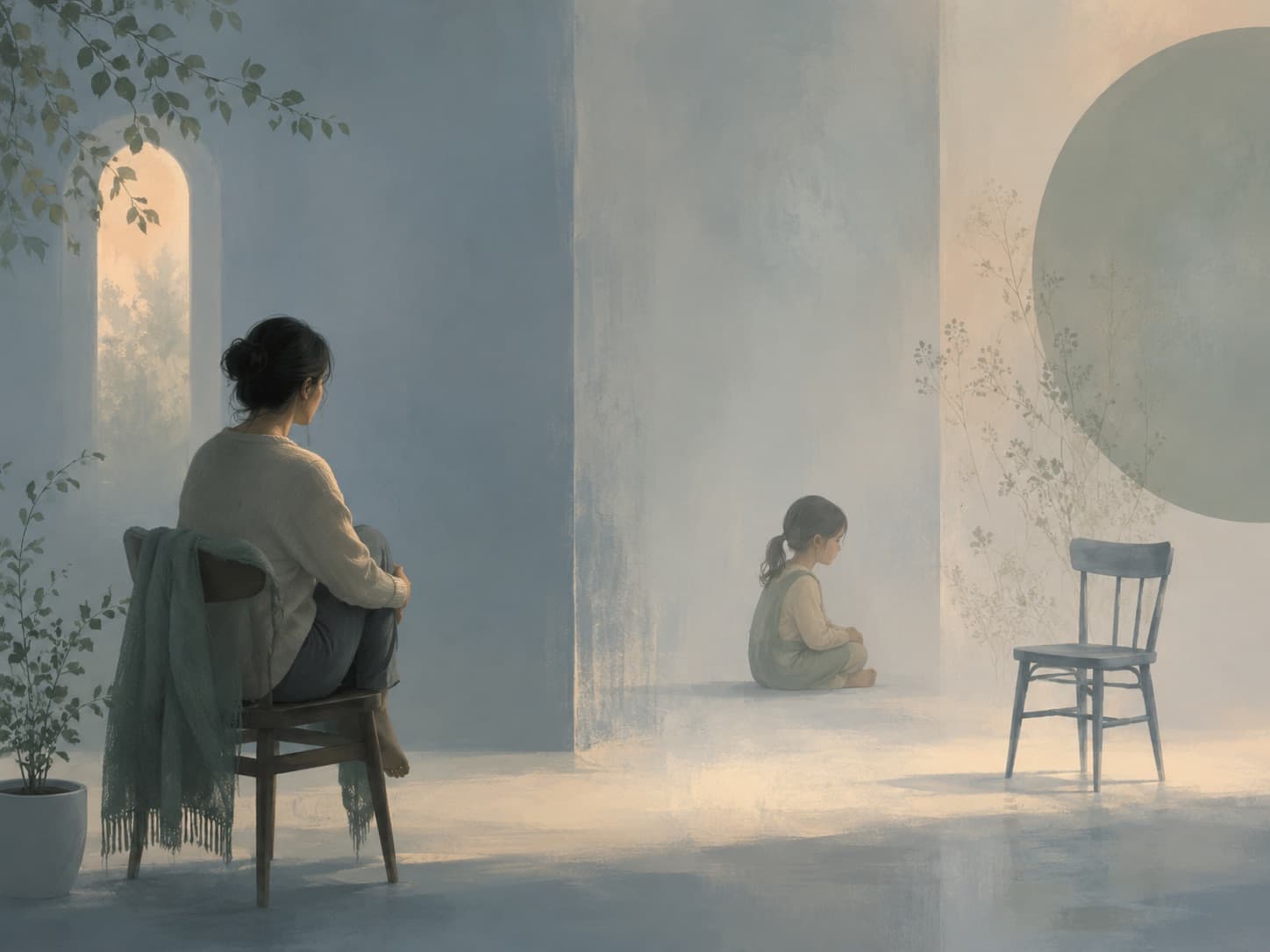
A reflective image representing silence, withdrawal, and emotional distance.

Why it matters

Silence can look peaceful from the outside

But in relationships, silence is not always peace. Sometimes silence is distance. Sometimes it is withdrawal. Sometimes it is fear. Sometimes it is punishment. Sometimes it is emotional absence.

Over time, emotional absence can be profoundly damaging. A child needs someone to notice their feelings, delight in them, comfort them, respond to them, and help them make sense of themselves and the world. When this is missing, they may grow up believing their childhood was "fine" while carrying loneliness, shame, emotional flatness, or difficulty with adult intimacy.

The illusion of peace

Keeping the peace can slowly erode intimacy

Many families and couples avoid conflict in the name of "keeping the peace". On the surface, this can look mature or kind. Nobody is shouting. Nobody is making a scene. Everyone carries on.

But avoiding conflict is not the same as resolving conflict. When people routinely swallow feelings, hide anger, avoid difficult conversations, or emotionally withdraw, the relationship may appear calm while slowly losing intimacy and vitality.

Silence itself is not the problem. It can be thoughtful, reflective, respectful, or regulating. It becomes harmful when it is used to avoid truth, shut down connection, punish another person, or protect the appearance of harmony while emotional reality goes underground.

Over time, unspoken hurt does not disappear. It becomes resentment. Desire fades. Generosity dries up. Partners begin to live parallel lives. The relationship may continue practically, but emotionally it becomes lonely.

Childhood roots

Silence often begins as adaptation

The tendency to keep quiet often begins in childhood. Some children grow up where anger is frightening. Others grow up where emotions are ignored, minimised, mocked, or met with silence. Some parents are not cruel, but emotionally unavailable, depressed, distracted, overwhelmed, shut down, or unable to respond.

This is not always remembered as trauma because there may be no single obvious event to point to. It may simply feel like a normal atmosphere. But an atmosphere can shape a nervous system.

Learned messages

  • My feelings are too much.
  • My needs are inconvenient.
  • It is safer not to say anything.
  • Nobody really wants to know.
  • Connection hurts.
  • If I want closeness, I have to abandon myself.

Still-face

Human beings are wired for response

One of the clearest illustrations of emotional absence comes from Dr Ed Tronick's well-known still-face experiment. A mother first interacts warmly and playfully with her baby. The baby responds with smiles, sounds, and gestures. Then the mother turns back with a blank, silent, unresponsive face.

The baby immediately notices the rupture and tries to re-engage. When the mother remains emotionally unavailable, the baby becomes distressed and eventually collapses into withdrawal and tears. For a baby, an unresponsive caregiver is not neutral. It is frightening.

When a parent is chronically emotionally absent, silent, dismissive, or unavailable, the child may live in a kind of repeated still-face environment. They learn to stop reaching. From the outside they may look "good", "easy", "independent", or "mature". Inside, they may be learning not to need.

The emotional ghost

What repeated emotional absence can teach

When a child repeatedly reaches for connection and is met with nothing, they may begin to feel invisible. They can internalise messages like "I am not important", "My feelings do not matter", and "Nobody is coming."

Many children adapt beautifully. They become capable, responsible, funny, clever, helpful, successful, or independent. But later the cost may show up as depression, anxiety, emotional numbness, people-pleasing, fear of conflict, difficulty expressing needs, or a painful sense of disconnection in relationships.

Adult relationships

When withdrawal becomes stonewalling

The child who survived by shutting down may become an adult who does the same in conflict. When a partner raises an issue, expresses hurt, or becomes angry, the nervous system may register danger. The body may move into freeze or shutdown.

The person withdrawing may genuinely believe they are preventing escalation. But for the partner on the receiving end, silence often does not feel calm. It feels abandoning. It feels rejecting. It can feel like being emotionally erased.

Pursue-withdraw cycle

Each person's protection becomes the other person's wound

One partner feels hurt, lonely, or disconnected and tries to reach. The other feels overwhelmed, inadequate, attacked, or trapped, and withdraws into silence. The more one partner withdraws, the more panicked the other becomes. The more the other pursues, the more the withdrawing partner shuts down.

Both partners are often trying to protect themselves. But the real wound becomes the repeated experience of not being able to reach one another.

Harmful silence

Not all silence is abusive, but some silence wounds

Some people need time to regulate before they can speak. Taking space can be healthy when it is named and repaired, for example: "I'm feeling overwhelmed and I don't want to say something hurtful. I need twenty minutes, but I will come back."

Silence becomes harmful when it is used to punish, control, avoid accountability, end a conversation unilaterally, or make the other person feel desperate for contact. The silent treatment weaponises our need for connection.

What was missing

A wound of absence can still be a wound

Many people minimise their childhood pain because they compare it to more obvious forms of trauma. But emotional needs are not luxuries. They are developmental necessities.

A child needs more than food, clothing, education, and a quiet home. They need to feel felt. They need repair after conflict, comfort when distressed, and adults who can tolerate their emotions. When these things are missing, the wound can be difficult to name because there is no dramatic story, only the ache of what never happened.

Healing

From silence to safe expression

Healing does not mean becoming confrontational for the sake of it. It means slowly developing the capacity to stay emotionally present with yourself and another person. It means learning that conflict does not have to equal danger, and that anger can be information rather than destruction.

It may sound like this: "Something hurt me." "I need to talk about this." "I'm scared you won't hear me." "I'm feeling overwhelmed, but I don't want to disappear." "I need a pause, and I will come back." "My feelings matter, and so do yours."

Relational maturity is not the absence of conflict. It is the ability to move through conflict with respect, honesty, and repair. True peace is not created by silence. True peace is created when people can tell the truth and still remain connected.

Closing thought

What was missing mattered

Silence can look like peace, but sometimes it is the absence of life in a relationship. A relationship does not only need the absence of harm. It needs the presence of warmth, responsiveness, truth, repair, and emotional contact.

For many people, healing begins with recognising that the pain they carry is not imaginary, dramatic, or ungrateful. Something may have been missing. And what was missing mattered.

The work of therapy is often to help give voice to what had to remain silent, to understand the protective strategies that once helped you survive, and to slowly risk a different kind of relationship: one where truth and connection can exist together.