Within your window
Steady enough to think, feel, and respond
- You can feel emotions without being taken over by them.
- You are more likely to feel flexible, grounded, and able to take things in.
- You may still feel stress, but it is more manageable.
Nervous system resource
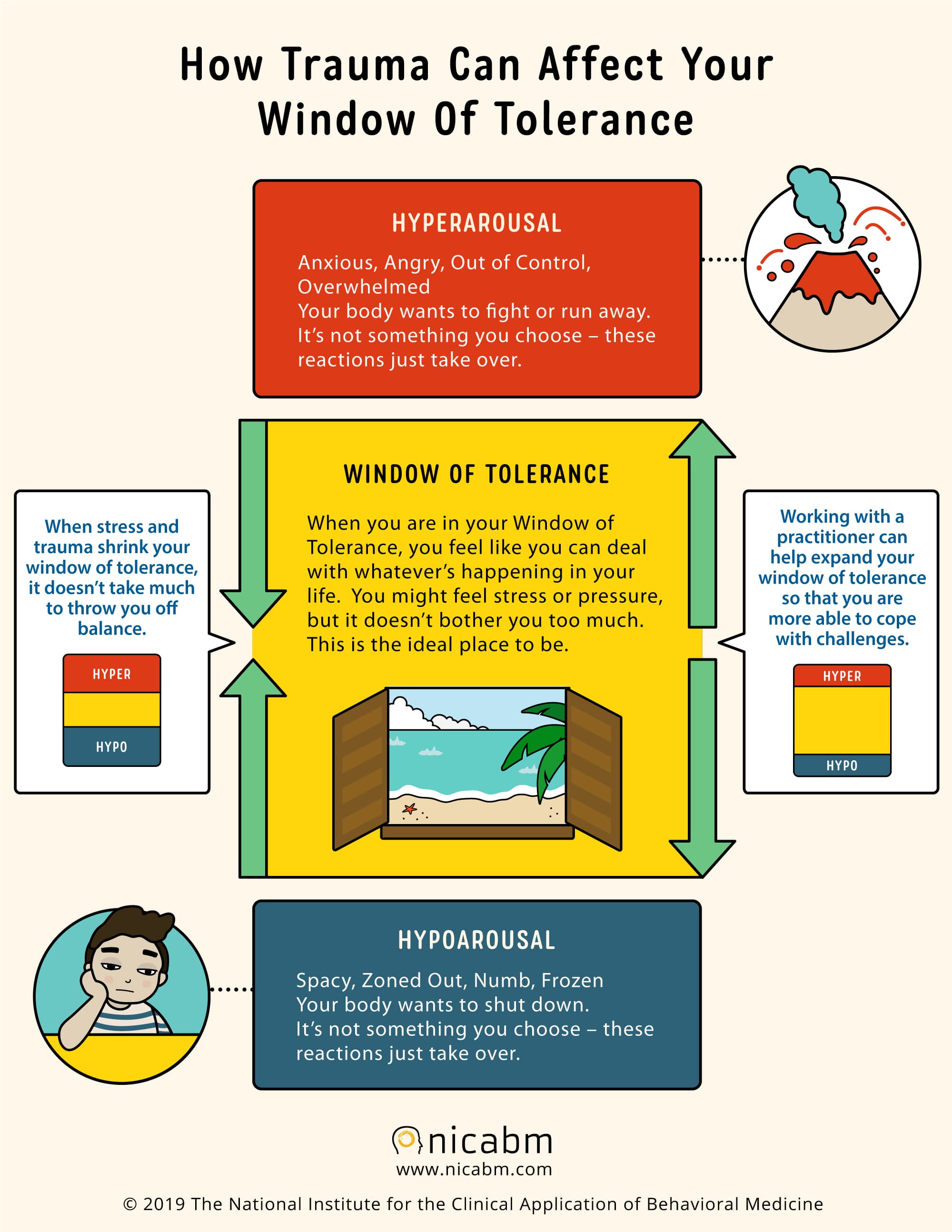
The Window of Tolerance, a concept developed by Dr Daniel Siegel, describes the zone in which you can stay present enough to think, feel, and respond with some balance. When you move outside that window, your nervous system may shift into overwhelm or shutdown.
If this happens to you, it does not mean you are failing or being difficult. It usually means your body is trying to protect you in the best way it knows how.
Steady enough to think, feel, and respond
Hyperarousal: your system moves into alarm
Hypoarousal: your system moves toward shutdown
A simple visual
This visual can help make sense of why stress may feel manageable at one time and completely overwhelming at another. Trauma, long-term stress, and difficult early experiences can narrow the window, so it takes less for you to feel thrown off balance.
The encouraging part is that the window is not fixed. With awareness, practice, and support, it can widen over time.
First step
One of the most helpful skills is learning to spot when you are moving toward the edge of your window. This is where self-monitoring can become compassionate rather than critical.
Try SIFT
In the moment
Building capacity
Widening your window does not usually happen by pushing through. It happens through repeated experiences of noticing, regulating, and recovering with enough safety and support.
Learn the clues that tell you you are nearing the edge of your window. You might notice a tight jaw, shallow breathing, a racing heart, blankness, or losing words.
Pause and gently check in with Sensations, Images, Feelings, and Thoughts. Naming what is happening often brings a little more steadiness and choice.
Slow breathing, sipping water, stretching, shaking out your hands, or swaying can help your nervous system shift out of overwhelm or collapse.
Simple words can help. Saying to yourself, 'I am feeling anxious' or 'I am starting to shut down' can reduce the intensity and help you orient.
Co-regulation matters. A calm, attuned relationship with a therapist or trusted person can help your system feel safer and expand what becomes tolerable over time.
Widening your window usually happens gradually. The aim is not to force yourself, but to build capacity in small, manageable moments of challenge and recovery.
A compassionate reminder
The goal is not to stay calm all the time. The goal is to recognise what is happening, respond with more care, and return to yourself more easily.
Over time, states of steadiness can become more familiar traits. That is part of how healing deepens.
Support
Many people find it easier to work with the edges of their window in therapy, where experiences can be approached slowly, safely, and with attuned support.
If this resource resonates, you are welcome to bring it into our work together.
Get in touchRelated resources